Table of content
INTRODUCTION
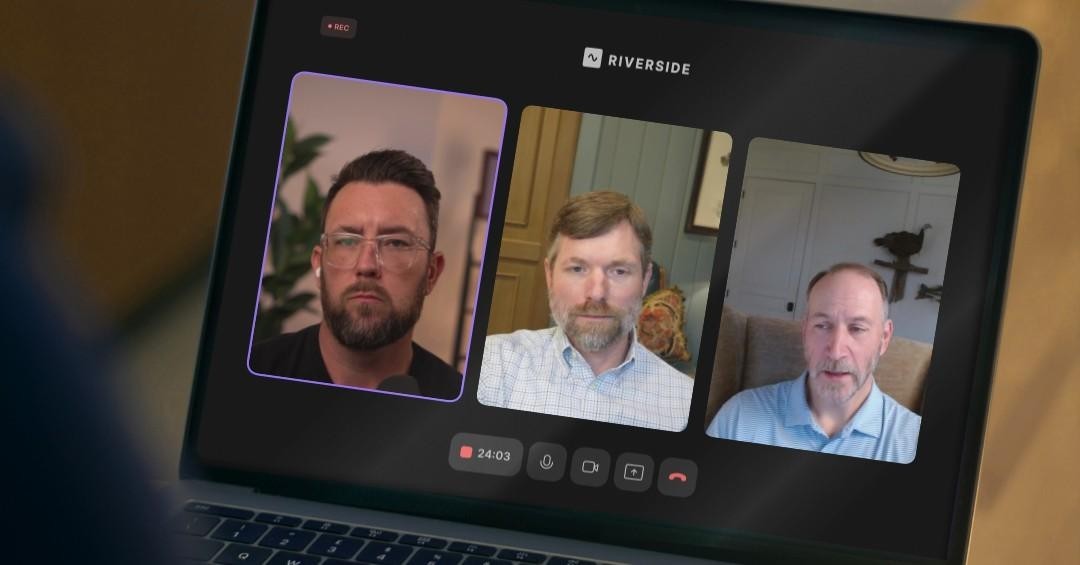
Will you lose clients during transition? How do you cover the financial gap? What happens to your practice ownership? These seven questions keep advisors trapped in misaligned firms for years. Axiom founder Jerry Corless and veteran advisor Chas Emerson share exactly how they addressed each concern—including Chas's personal experience moving 150 households in two months without losing a single client.
1. "What happens to my client relationships if I transition?"
Jerry explained that this concern has multiple meanings:
Your advisor agreement.
Non-competes, non-solicits, and non-replacements are three specifically different provisions. You have to understand what they are. "What's most important in those things is that we just do the right thing," Jerry said. "With the very large number of affiliated advisors that have come to us from another home, to date, Axiom has not experienced legal disputes related to advisor transitions. We believe this
reflects our focus on compliance and integrity—but each transition is unique. It's really about knowing and understanding their current agreement and simply abiding by it."
Privacy statements.
Jerry called this "kind of this backhanded non-compete to put people out of business." Companies create very restrictive privacy statements that say they won't share information with anyone not affiliated with them. "By that definition, the advisor leaves, they have to leave all of the client files, all of the client information. They simply cannot take anything with them at all, or they're violating that privacy statement." If your privacy statement is negative, Jerry's advice: "I would exhort you to not build any more business there than you already have."
The transition process itself.
"Over the course of time, we have literally built out a checklist of everything that we have seen that could potentially go wrong in the transition process," Jerry explained. "Over 10 people are involved in that team and literally checking every one of those boxes to ensure that a transitioning advisor and their associated clients have as seamless and efficient of an experience as they possibly can."
Chas shared his personal experience: "I transitioned to Axiom in 2017 with around 150 households. All 150 households transitioned with me, and the process was completed within two months. And that was when we still had to paper everything."
Jerry’s summary: ‘While that is a natural concern, client loss during transition has not been a common outcome in our experience.’ We have the depth of experience and
have built the people and the systems to support efficient, pleasant transition... Many advisors have retained most or all of their clients during transitions with Axiom, though individual results may vary.."
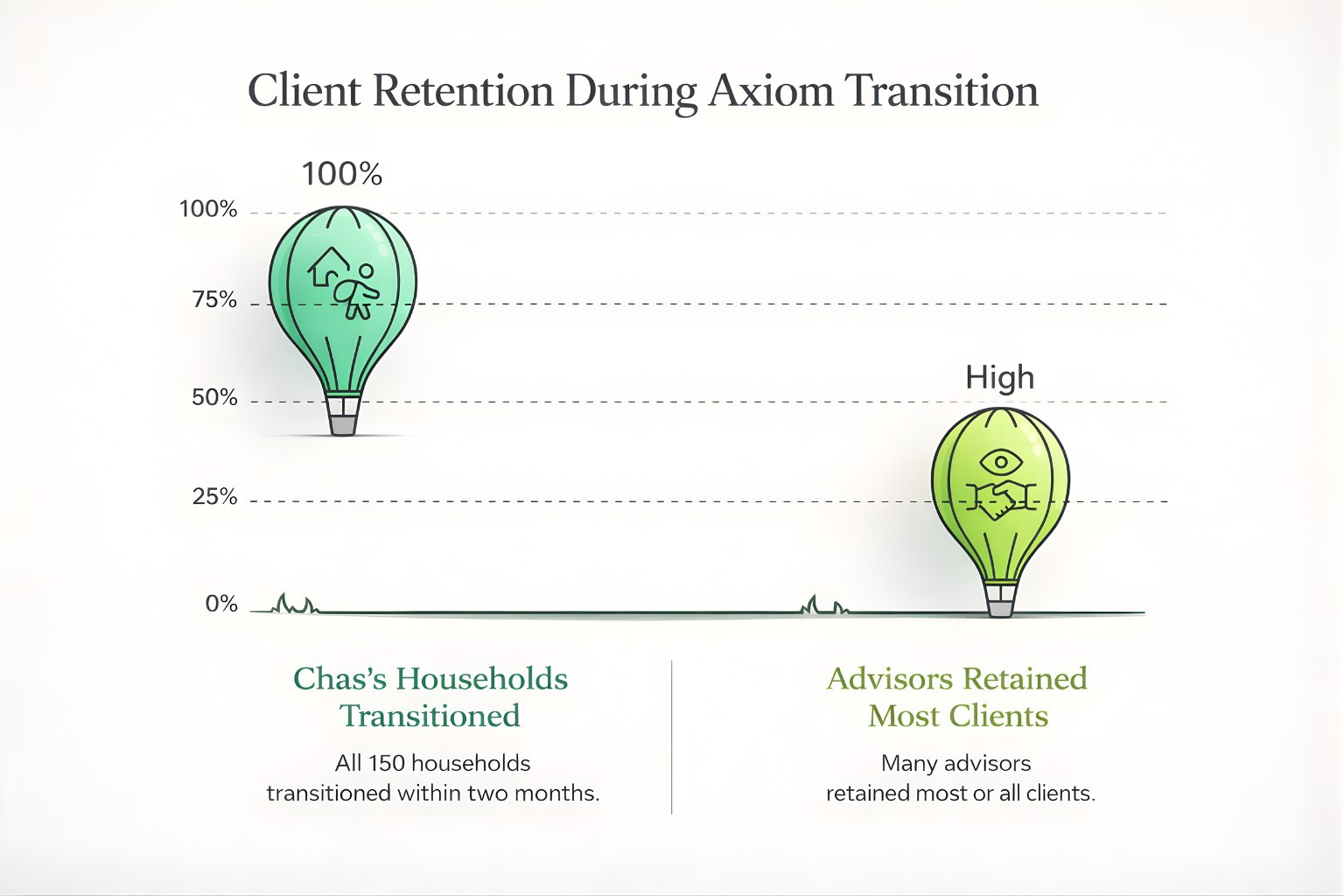
Chas shared his personal experience: "I transitioned to Axiom in 2017 with around 150 households. All 150 households transitioned with me, and the process was completed within two months. And that was when we still had to paper everything."
Jerry’s summary: ‘While that is a natural concern, client loss during transition has not been a common outcome in our experience.’ We have the depth of experience and
have built the people and the systems to support efficient, pleasant transition... Many advisors have retained most or all of their clients during transitions with Axiom, though individual results may vary.."
2. "What about the financial impact during transition?"
"In today's marketplace for RIAs and broker dealers, transition compensation is common and significant," Jerry explained. "Our RIA and broker dealer affiliations are no different. At that institutional level, there are capital programs to facilitate. And then in addition to that, Axiom, depending on the advisor circumstances in their business and things of that nature, has wholesale revenue as well from both the insurance and the wealth management side and also participates."
Chas highlighted another critical piece: "Providing capital to not just transition to us, but also to transition to that recurring revenue model is also very important to us."
What Jerry finds: "Some advisors report being in a stronger financial position after transitioning, depending on their individual business model, expenses, and previous compensation structure. And that has to do with scale and specific capital investments that we make."
3. "What about operational and technology changes?"
Jerry outlined Axiom's three levels of technology support:
"We have full-time hardware tech folks for things that break and things that need to get fixed and things that need to get installed. We have a technology application specialist—how do we apply technology for your specific situation as an individual consultant. And then the third piece is also within the ecosystem of the operating environment for a financial practice specifically. We have internal resources in terms of the wealth management ecosystem, the insurance ecosystem and understanding how to operate in those systems, the CRM that you use, from both the supervisory standpoint as well as a practice management standpoint."
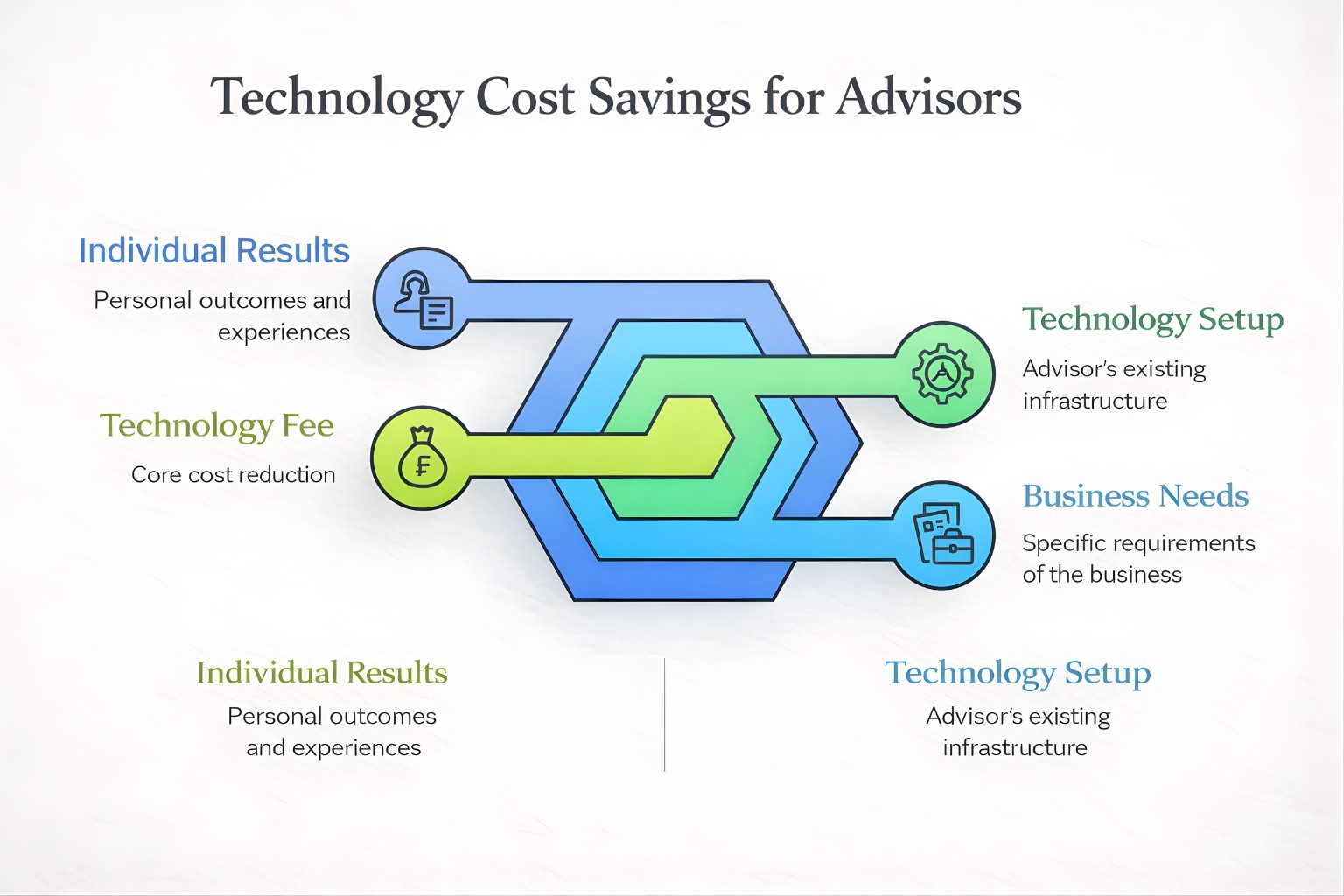
Chas shared the impact: "Majority of the time they're able to use the exact same technology. In my experience, nothing major changed from a technology standpoint. The thing that really changed more than anything is my technology fee — it's literally 10% of what it was when I was on my own, paying the street-level cost. Individual savings may vary depending on the advisor’s prior technology setup."
In Chas’s case, technology expenses dropped significantly after transitioning. Actual cost savings will vary based on business setup and technology needs. This example reflects one advisor’s personal experience. Individual results will vary and this may not represent typical outcomes.
Jerry explained how: "It's a combination of things. Some things we just pay for those things so that advisors don't have to pay for those things using wholesale dollars.
And then part two would be the power of the collective itself... We went back to the vendor and said, this is Axiom, this is the collective and what they generate. What can you do for Axiom and the scale of Axiom? And it was further reduced by another 20-30%.”
4. "How do you handle compliance and regulatory issues?"
"Our position is that compliance is not the boogeyman or is not a negative thing," Jerry began. "If you think about the regulatory world, there is compliance, which is really
potentially when there are consequences for behavior that has occurred. And then there's supervision, which is the preempt to that, which is, what are the rules and how do we stay within those?"
Jerry made a critical distinction: "There's really kind of two worlds that you're living in simultaneously. One is your relationship with the SEC and FINRA, the regulatory bodies. They have rules and regulations—black and white, you transgress, you have a problem.
And then you have your RIA and/or broker dealer, which has policies and procedures. Those are not the same thing. Policies and procedures can be more restrictive than rules and regulations."
"Axiom has a supervisory team in place that understands rules and regulations versus policies and procedures," Jerry explained.
"Having an acute understanding of the regulatory environment, the rules and the regulations, policies, procedures, relationships with the people who make those decisions, and then consulting with advisors and their teams to ensure that we never get to a compliance standpoint because we stop everything within the supervisory side."
Chas added: "The consulting is more or less proactive communication, helping stay ahead of that curve. What we often say is don't think of the help and assistance and consulting and communication we're doing as the police. We're coming in there to help you stay away from the police. We're your friends. It's a different mindset."
Have specific questions about your transition scenario? Our team has guided dozens of advisor transitions and can provide confidential guidance on your situation. [Connect with our transition team]
5. "What does ongoing support actually look like?"
"Like most companies, Axiom is broken into divisions," Jerry explained. "There's the fee-based financial planning company. There's the insurance strategy group, which takes our rules-based insurance and that's communicated in plans and turns that into actual insurance proposals. Then you've got the wealth management division. Then there's the practice management or advisor services division that helps them with things like their internal team, the hiring, the training of their internal team members and technology assistance. Those are ongoing living divisions inside of Axiom that advisors and their teams just continue to interact with."
Chas highlighted the collaborative culture:
"From my standpoint, I truly was on an island. Another aspect to the support is from a cultural standpoint, a culture of sharing. We have a best practices call. We have our best of the best speak on different subjects throughout the year. We have an event where we all get together for what we call mastermind once a year for a two day event. It's the old concept of iron sharpening iron."
"I historically have not been a part of a group where people truly want to see you improve and get better and do it together," Chas added.
Jerry mentioned:
"We do an annual anonymous survey with our advisors and with their administrative team members where they rate us on scale of one to five and then they also provide comments. We want to know, are we missing something? Where can we get better? Are there other ways we can add value?"
6. "How does compensation really work?"
"From a compensation standpoint, number one, it comes from two directions," Jerry explained. "It is what your payout is to some degree, and it's also what your expenses are not."
"From a production standpoint, our payouts are very similar to the independent broker dealer world. Certainly very competitive there," Jerry said. "But it's more, what are specific Axiom applications that we have that further enhance and optimize the advisor income opportunity?"
Specific enhancements Jerry mentioned:
• Axiom uses wholesale dollars to reduce or eliminate advisor expenses
• For qualifying advisors, Axiom may offer enhanced compensation above standard institutional payouts. Terms and eligibility vary.
• For affiliated companies at high business levels, there's the Partners Plan where Axiom shares monthly wholesale revenue from insurance and investment business back to their practices
• Capital bridges for advisors whose recurring revenue isn't yet higher than the sum of their business and personal budgets
• Supplemented benefit package
Chas summarized: "Almost all that we do revolves around allowing the advisor to spend their time doing what they like doing, which is being in front of clients and managing that time. Those are revenue making activities. So we think we can add alpha not just by giving them a higher payout, but also allowing them to do their green time, doing the things that make them the most money."
7. "What does true ownership actually mean?"
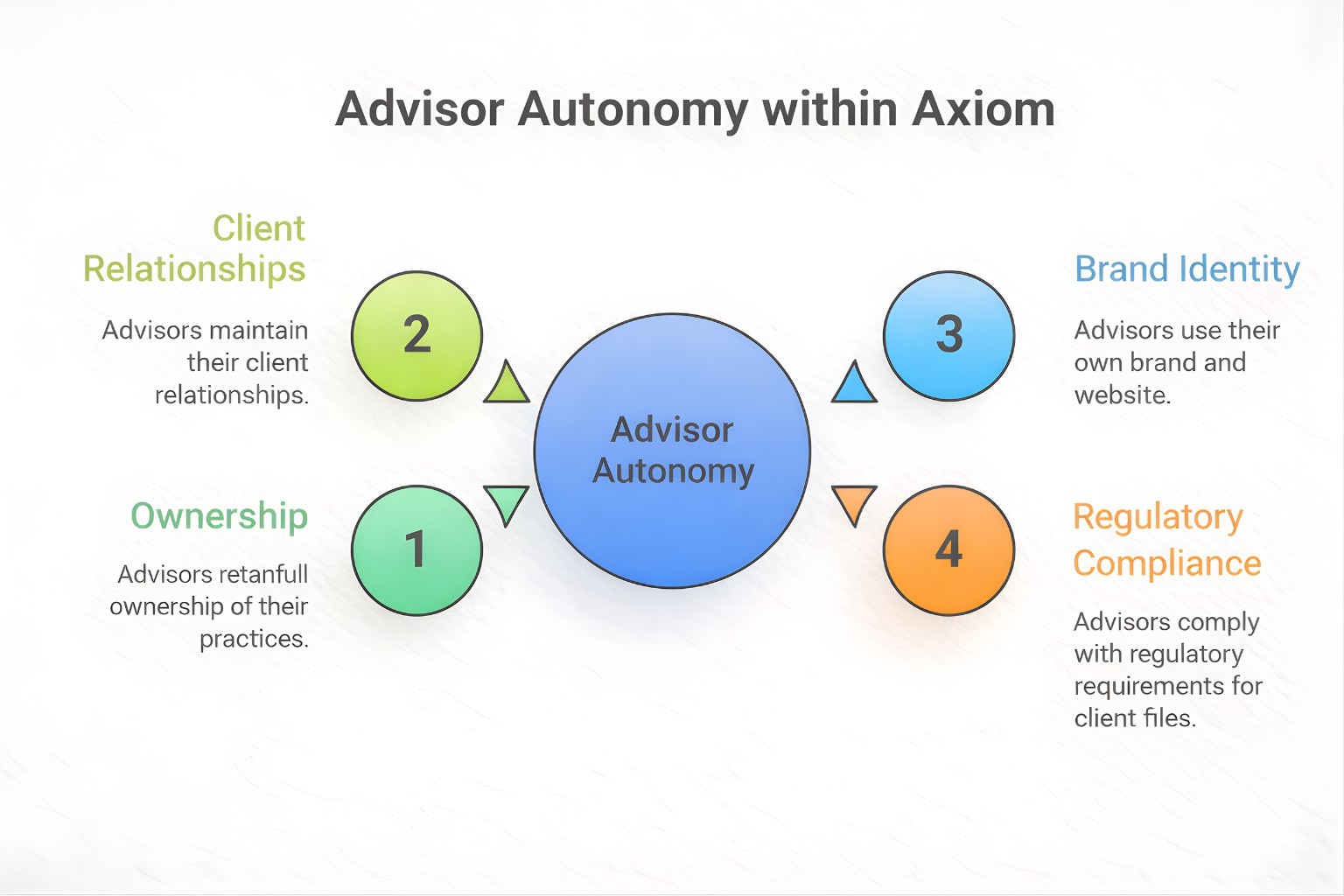
"Advisors retain full ownership of their practices,” Jerry stated. “Axiom does not take any ownership interest in an advisor’s business. Advisors are clients of Axiom and can leave at any time, taking their brand and client relationships with them, subject to applicable regulatory requirements."
Jerry explained: "Our privacy statement does say that if they leave, they can take a copy of their client files with them when they go. The only reason we retain is the regulatory requirement that says we have to maintain them for a period of years."
"No advisor that's affiliated with Axiom uses the name Axiom. They have their own name. They have their own brand. They have their own website. Everything is theirs," Jerry continued.
Jerry shared one of Axiom's core sayings: "The freedom to leave at any time is what allows the elite in production and character to come and stay. Axiom is designed for independent advisors who choose to be part of our platform—not because they’re locked in, but because it continues to meet their needs."
Both Jerry and Chas spoke from personal experience. "Before the independent space, we were in an environment that when we left, it was highly contentious, incredibly difficult," Jerry said. "Axiom is built around ensuring that people never have that experience and that what advisors have built, they fully own, and Axiom’s structure is designed to support and protect that independence."
Chas added: "In our first organization, we used to joke that we were told we owned our practices, in quotes, until we got ready to leave. I would not have transitioned here if it was not in writing that I have a copy of my client files that I can carry with me should I leave."
Who Is This Right For?
When asked which advisors successfully transition to Axiom, Jerry's answer was clear: "We're looking for the right person."
"Advisors have to have the desire to be in holistic business—designing a plan or presenting plans for clients holistically and then providing the accountability with the clients to see that those are implemented from an insurance and wealth management standpoint.
The intellect to perform that role, the work ethic, the communication skills. That's really the functional side of being able to execute in holistic financial planning."
"And then I also have to operate in our collective spirit of execution, which is goodness and gentleness and kindness and humility," Jerry added. "What makes Axiom special and what's powerful about it is the collaboration of the collective. There's all these opportunities where advisors have access to advisors that are top 1% in the industry, and they're open and they share, they're humble, they're kind."
On production requirements, Jerry said: "My answer is always looking for the right person. If we have the right person—they have the functional ability and then they have the mind and the heart that's a match—production will come. Some people are coming to us as seeds that need to be in fertile ground. Some people are coming to us as mighty oaks. But the common theme among all of them would be the heart."
What An Initial Conversation Looks Like
"The first question is always, I'd love to hear your story," Jerry said. "How did you get where you are today? And why are you open for a conversation? What is it that you're looking for?"
"And then it just goes in reverse. We tell the Axiom story with full transparency. There's nothing that an advisor is not allowed to ask about Axiom. Revenue, how it works, expenses and what they are. We believe that if transparency kills a deal, then it's a deal that shouldn't be made in the first place."
Chas added an important note: "We're not going to put pressure on anyone. For me, it was a four and a half year conversation. Sometimes it may be in two months and other times it may take an extended amount of time for someone to get comfortable."
----
Ready to explore your transition options? Schedule a no-pressure conversation to discuss your specific situation. Axiom's initial consultations focus on understanding your story—with full transparency about how we work, what we cost, and whether we're the right fit for your practice.
Schedule Your Confidential Consultation
Related Articles:
- Breaking Through the Solo Ceiling: A Guide to Building Enterprise-Level Advisory Firms
- Breaking Through the Hamster Wheel: The 5 Phases of Building a Sustainable Financial Advisory Practice
- How to Build a Never-Asking-For-Referrals Business
Disclaimer:
The experiences shared in this blog reflect individual advisor journeys and are not guarantees of results. Compensation, client retention, cost savings, and business growth will vary depending on numerous factors. This content is for informational purposes only and does not constitute legal, financial, or regulatory advice.